
If you’ve ever come across “NTY” in a text message and found yourself scratching your head, you’re not alone. In today’s world of rapid-fire messaging, we’re constantly bombarded with abbreviations and internet slang that can be confusing. Whether you’re chatting with friends, engaging in group conversations, or browsing through social media, understanding these shortcuts can help you communicate more clearly and efficiently.
So, what does NTY mean in text?
Simply put, NTY stands for “No Thank You.”
In this guide, we’ll break down everything you need to know about NTY—its meaning, how it’s used, its variations, and why it’s become such a popular choice in digital conversations. By the end of this article, you’ll have all the tools you need to use NTY like a pro in your everyday chats.
Understanding NTY in Text
Full Definition of NTY
NTY is an abbreviation for “No Thank You.” It’s a concise and polite way to decline an invitation, offer, or suggestion without sounding harsh or rude. NTY is frequently used in casual conversations, gaming chats, and even social media interactions, where brevity and speed are valued.
Read Also: IMA Meaning in Text: 7 Best Examples and Ultimate Guide
Common Uses of NTY in Conversations
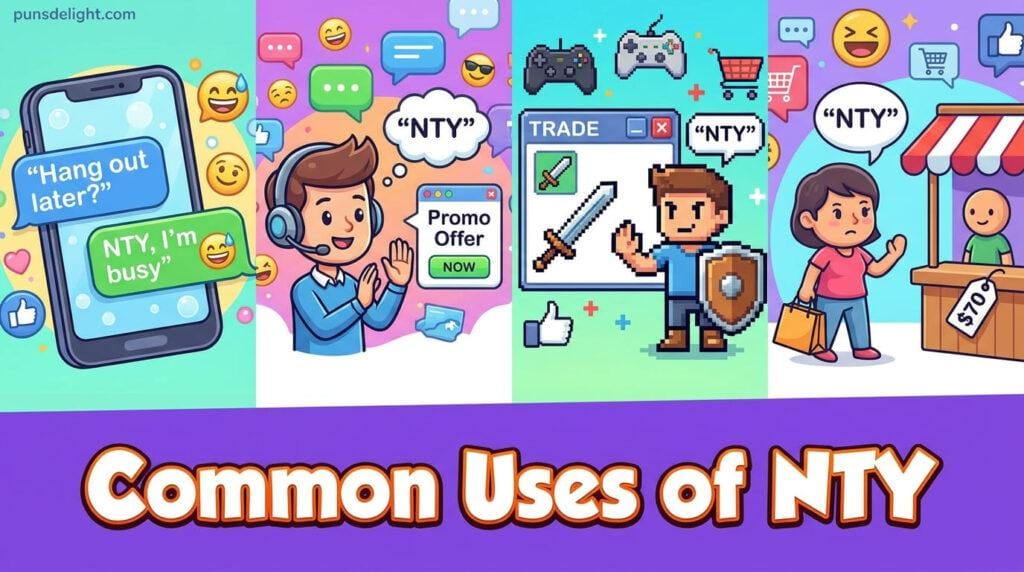
NTY is a versatile abbreviation. Here are some of the common scenarios where you’ll see it used:
- Texting with Friends: It’s often used to politely decline offers or invitations, such as, “Do you want to hang out later?” “NTY, I’m already busy.”
- Social Media: Whether it’s responding to a challenge or rejecting a product promotion, NTY helps keep things light.
- Online Gaming: In gaming communities, NTY is a quick way to decline help or trade offers.
- Marketplace Negotiations: When negotiating prices, NTY is an efficient way to say “No” while maintaining respect.
Why People Prefer NTY Over “No Thank You”
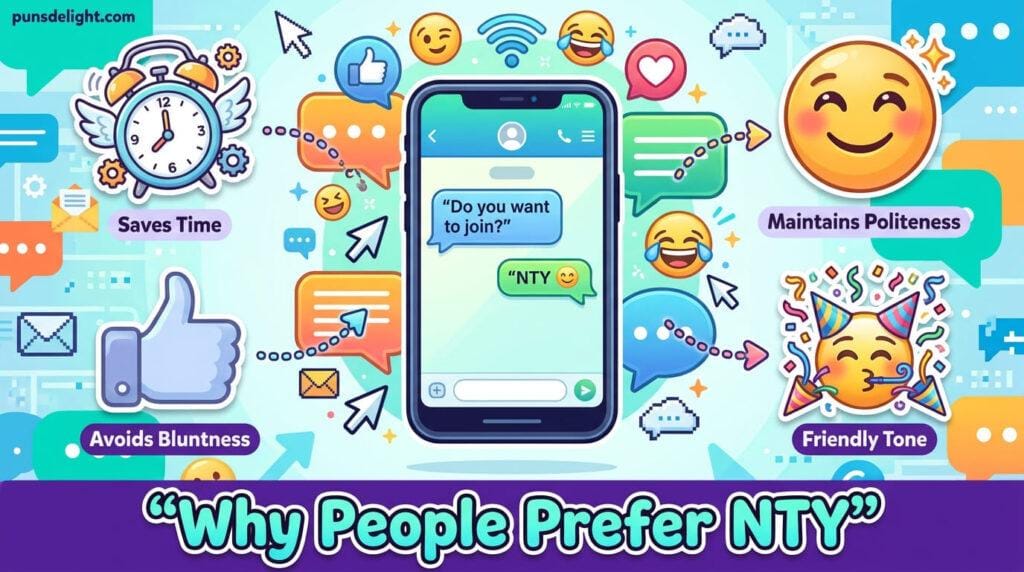
Why has NTY gained popularity in digital communication? Here are a few reasons:
- Saves Time: NTY is short and allows you to respond faster, which is ideal for texting and online chats.
- Maintains Politeness: It’s a friendly, non-abrupt way to decline something without sounding dismissive.
- Casual and Friendly Tone: NTY keeps the conversation informal and casual, which is perfect for texts with friends or colleagues.
- Avoids Bluntness: Using NTY feels less harsh compared to just saying “No,” making it perfect for conversations where you want to maintain good rapport.
How to Pronounce NTY Correctly
Although NTY is most commonly used in written form, some people might pronounce it playfully as “En-Tee-Why.” In standard conversation, however, it’s usually expressed as “No thank you,” especially in formal situations.
Is NTY Formal or Informal?
NTY is an informal abbreviation and should primarily be used in casual conversations with friends, family, or colleagues. It is not appropriate for:
- Formal emails: Avoid using NTY when corresponding with clients, employers, or in any official communication.
- Professional proposals or documents: Always write out “No thank you” in formal settings.
- Academic papers: Stick to full phrases in scholarly writing.
Rare and Alternative Meanings of NTY
While NTY predominantly stands for “No Thank You,” it can occasionally take on other meanings depending on the context:
- Not This Year – used in event planning or discussions about timing.
- Need To Yawn – used humorously to indicate boredom.
- Not To Yell – often used in memes or as part of humorous exchanges.
However, these meanings are rare, and the context of the conversation usually makes it clear that NTY means “No Thank You.”
How to Use NTY in Text Messaging
NTY is a flexible expression. Here’s how to use it in various contexts:
Politely Declining Invitations
A: “Want to come over tonight?”
B: “NTY, I’m staying in 😌”
Rejecting Offers with Ease
A: “Want some pizza?”
B: “NTY, I’ve already eaten 🍕”
Avoiding Unwanted Spam or Sales Calls
A: “Try this amazing product?”
B: “NTY, thanks.”
Using NTY Playfully in Casual Chats
A: “Join the challenge?”
B: “NTY 😂”
Setting Personal Boundaries with NTY
A: “Can you share your password?”
B: “NTY 😅”
Read Also: Meaning Of: A Simple Guide to Understanding Words, Slang, Symbols, and Online Terms
Examples of NTY in Everyday Conversations
NTY works in various situations, including:
Casual Texting with Friends
A: “Movie night?”
B: “NTY, busy tonight.”
Friendly Banter in Social Groups
A: “Wanna fight?”
B: “NTY 😂”
Informal Workplace Communication
A: “Join the early call?”
B: “NTY, finishing my report.”
Using NTY in Online Gaming Communities
A: “Need help with the quest?”
B: “NTY, I’m good.”
Negotiating Prices in Marketplaces
A: “Final price 350?”
B: “NTY. Minimum 400.”
Does NTY Sound Rude? Understanding Its Tone
NTY can be polite, but tone matters. Here’s how tone can shift depending on the context:
- NTY. → A firm, possibly curt rejection.
- NTY 😊 → Friendly and soft, showing warmth.
- NTY… → Can sound hesitant or thoughtful, indicating a more reflective decline.
Adding emojis or extra words can soften the tone and ensure your message isn’t misunderstood.
NTY vs. Other Ways to Decline Politely
There are other ways to decline politely, but NTY strikes a balance between brevity and courtesy:
| Expression | Politeness | Tone | Best Use |
|---|---|---|---|
| NTY | High | Polite, short | Everyday texting |
| No | Medium | Direct | Urgent replies |
| Nope | Medium-Low | Casual, playful | Friends |
| Nah | Low | Very casual | Informal chats |
| No Thanks | High | Friendly | Formal/informal |
NTY is the best middle ground for texting casually and politely without being too direct.
Variations and Abbreviations of NTY
While NTY is widely used, other variations exist:
- NTYSM – No Thank You So Much
- NTT – No Thanks Though
- NO TY – Spaced version of NTY
- TYNT – Thank You, No Thanks (playful)
However, none of these alternatives are as popular as NTY.
How NTY Pairs with Emojis in Texts
Emojis can help clarify the tone of NTY. Here are some ways to use NTY with emojis:
- Friendly: NTY 😊, NTY ❤️, NTY ✨
- Playful: NTY 😂, NTY 😅
- Soft Decline: NTY, maybe next time 🌸
- Firm Decline: NTY.
When NOT to Use NTY in Communication
While NTY is useful, there are situations where it’s not appropriate:
- Serious Conversations: Avoid NTY in deep or emotional discussions.
- Sensitive Invitations: NTY may come across as cold if someone is sharing personal or vulnerable information.
- Professional Emails: Use full phrases like “Thank you for your offer, but I must decline.”
In formal situations, always express your decline with complete sentences for clarity and professionalism.
Why NTY Is Essential for Modern Text Communication
NTY reflects the fast-paced nature of digital communication. It allows people to respond quickly, maintain politeness, and keep conversations flowing smoothly. Understanding abbreviations like NTY helps reduce misunderstandings and promotes clearer interactions in casual conversations.
Cultural Significance of NTY Across Regions
The way NTY is perceived can vary depending on culture:
- Western cultures: Short declines like NTY are standard and well-accepted.
- South Asian cultures: People often prefer more detailed explanations when declining.
- East Asian cultures: Indirect declines are preferred, so NTY may sound too direct.
- Gaming communities: NTY is neutral, understood, and widely used.
Common Mistakes When Using NTY in Texts
To use NTY effectively, avoid these mistakes:
- Overusing NTY: It should be used sparingly to avoid it sounding robotic or dismissive.
- Using NTY in Serious Conversations: NTY can seem disrespectful in sensitive or important discussions.
- Misreading the Tone: Without context, NTY might seem colder than intended.
NTY in Online Gaming: A Unique Context
In online gaming, NTY is a quick and effective way to decline offers without disrupting the flow of the game. Whether you’re rejecting help or trading items, NTY helps keep the conversation polite and efficient.
How NTY Is Used in Social Media Posts
NTY is commonly used in social media DMs or comments to politely decline:
- “Join our challenge?” → “NTY 😊”
- “Try this link?” → “NTY, not interested.”
It’s a simple and effective way to keep interactions respectful.
Quick NTY Example Sentences for Clarity
Here are some quick examples of NTY in action:
- NTY, I’m full.
- NTY, that’s not for me.
- NTY, maybe later.
- NTY, I can’t today.
- NTY, already busy 😅
- NTY, but thank you for asking!
Read Also: ACC Full Form in Chat: Meaning, Usage, Examples, and Replies
Quotes on the Importance of Polite Communication
“Small words of courtesy, even in short messages, carry a big impact in maintaining kindness.”
Frequently Asked Questions About NTY
What Does NTY Mean in Text?
NTY stands for “No Thank You,” a polite way to decline offers or invitations.
Is NTY Considered Rude in Text Messages?
NTY is generally polite, but its tone depends on the context. It can be firm if used without emojis.
Can NTY Be Used in Professional Settings?
NTY is informal and should be avoided in professional emails or formal documents.
What’s the Difference Between NTY and “No Thanks”?
NTY is a shorter, more casual version of “No Thanks.”
Is NTY Safe for Kids to Use in Texting?
Yes, NTY is polite and harmless for children to use.
Conclusion: Final Thoughts on Using NTY in Text
NTY is an efficient and polite way to decline something in text messaging. It saves time while maintaining a friendly tone, making it ideal for casual conversations. However, it’s important to use it in the right context to ensure it doesn’t come across as rude or dismissive. Mastering NTY will help you communicate effectively and respectfully in the digital world.